Is Travelling Really Selfish?

Travel. It's almost a virtue, isn't it? People talk about loving to travel with pride, as if it makes them better people.

In a sense, they're right. There are some great benefits to seeing, in-person, the vast expanse and diversity of our planet and human cultures. I'm sure there is research showing that it opens our minds, perhaps makes us more compassionate or appreciative of difference in the world.

However, in light of climate change and the wild stratification of rich and poor, does it also make us worse people? Is travel not an increasingly selfish act?

In a sense, it always was selfish. We travel for ourselves. Even (or perhaps especially) if we're on one of these volunteer-based trips. We go places for our benefit: we want to see a new place, have a new experience, get away.

But now, is there an extra level of privilege embedded in it? I'm not talking about travelling in the pandemic which definitely exceeds 100 on the privilege and selfishness scale, but in the aftertimes. By travelling, we are saying, "I deserve to be here, in person, and see this thing with my own eyes. It is worth the cost to the climate and local culture and ecology, even if my being here is one step on the path to its destruction."

Sure, there are some benefits for others (mostly because we pay money to a lot of different people when we travel), but that's not why we do it. If it were just about distribution of finances, there are far more efficient and environmentally friendly ways to do that.

This is reminding me of zoos and aquariums. There is a material benefit to seeing the great creatures that used to be held in these places in person. To be awed by the majesty of orcas or lions or elephants. To learn about their diets and habitats, because we're seeing them! Right there! Live!

However, at some point between my childhood and today, society has decided that benefit is not worth the cost to the animals. To the point where even aquariums that operate only as rescue and rehabilitation centres are being targeted to stop housing cetaceans. (We still seem to be okay with smaller creatures being in cages, just not the big ones.)
 
Do you think our perspective on travel will change? Or do people just love it too much? It's possible that too many economies depend on making people feel like it's their right to travel to ever have it go the way of the whale show.


The Receptionist Delivers!
Sign up for my email newsletter for a bi-weekly digest and bonus content!

Want a Luxurious Life? Go to Bed Early

Recently, I made a realization that filled me with such joy: my group chats now tend to fade out between 9-10pm and then fade back in as early as 6am.

We are officially boring adults, y'all! And it feels like we won the lottery. Boring adults do whatever the heck they want without worrying about being cool. They still have fun, it's just far less strenuous. It's comfortable fun. Who doesn't like being comfortable???

But one of the best parts of all of it is the early bedtime. Early bedtimes are glorious. They are luxurious. Other people think they are childish and that grownups stay up late past 10pm, but I ask you, why???
 
Why stay up when literally the only thing you are doing is scrolling social media while another show plays on your TV and you still have to wake up at the same time tomorrow morning?
 
Why choose slouching on your couch over curling up on a BED that cradles your tired body and a BLANKET that nestles you into a world of comfort and warmth???

Why would you resign yourself to a life waking up feeling instantly miserable when you could wake up feeling only kind of unhappy? Neutral?? Maybe, sometimes, rested??? Dare we say, happy????
 
Why would you prioritize yawning your way through anything when you could just treat yourself like you matter and go to bed?

My bedtime isn't even that early, as early bedtimes go. I generally start getting ready around 9:30 so that I can read a little of my book and have lights out by 10. In a perfect world I would push it by 30 more minutes and be cozied up with my book around 9:15 but I can never quite do it.

But here's the thing: 6-9pm is PLENTY of time in the evening to meet up with a friend (or have a video "happy hour"), watch some episodes of a show, cook a meal, catch up on your emails, or otherwise get something done before drifting towards bed.
 
(And for all the parents reading this, I guess I'll say that 6-9pm is likely enough time to slog your way through dinner, bath time, and wrestling your kids to bed and then I understand the urge to have some alone/adult time and stay up later so do what you must but what if that alone/adult time was treating yourself like the precious being you are who also deserves rest?)
 
Yes, in the beforetimes there was occasionally karaoke or an out of town friend or a Celine Dion concert that took precedence over bedtime. Flexibility is a wonderful thing. But once you get used to the sweet bliss of an early bedtime, you'll realize that those exceptions had better be worth it.
 

The Receptionist Delivers!
Sign up for my email newsletter for a bi-weekly digest and bonus content!
The Rhythm of a Relationship

When I look back at my past relationships, there are a couple that I can see were kind of doomed from the start (or at least from early on). There are a few bits of evidence of that, but here's a new one I just came across: we couldn't find a rhythm together.
 
Everyone has a rhythm for how they live their life. The way they like to organize their days, the flow to how they fit in grocery shopping and laundry, their bed and waking times. It is, as Toku (the author of the post linked above) says, "the beat of your life."

So when people get together, a rhythm develops for the relationship and how you do life together. This is great! We change our rhythms all the time, and it can work really well, like when we realize we need to stop ordering takeout and find a new joy in cooking. Or when we realize we will always hate cooking and give ourselves the gift of ordering takeout more often.

The problem is that sometimes there is no rhythm that feels right to both of you. You either both try to compromise, jointly butting up against the unnaturalness of your attempted rhythm together, or one person completely adapts to the other.
 
It can feel like a loving act to give up your rhythm for your partner. And it is. It's a beautiful sacrifice of love that is going to leave you doomed. Our rhythms are a reflection of our needs and ignoring yours to fit someone else's entirely is like when we all adapted to live under COVID restrictions: we can do it, but we aren't exactly yearning to celebrate a lifelong union with the pandemic.

This was the issue with my last serious partner. When I tried to change my rhythm to match his bedtime and quiet needs, I felt trapped and constrained. When he tried to change his rhythm to match my social and activity needs, he felt overstretched and anxious. When we tried to find a middle ground, we barely spent any time together, which also felt bad (because, you know, we loved each other). We couldn't find a rhythm.

Maybe we could have kept working at it and found a rhythm that worked for both of us. In reality, though? I think that would have left both of us resigning ourselves to a life that never really fit. Our rhythms were too different.


The Receptionist Delivers!
Sign up for my email newsletter for a bi-weekly digest and bonus content!
Stephanie Unger Makes It Fun

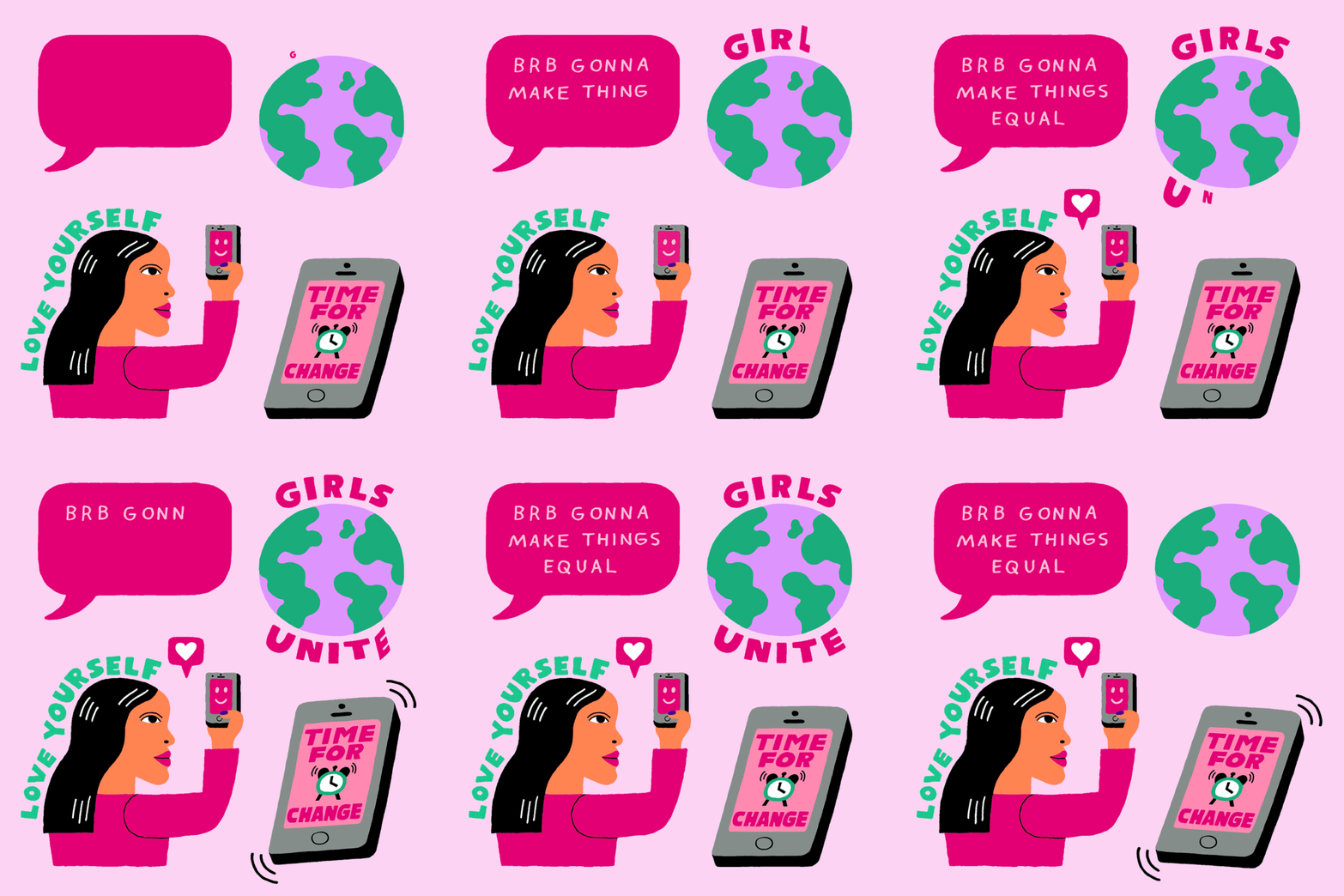
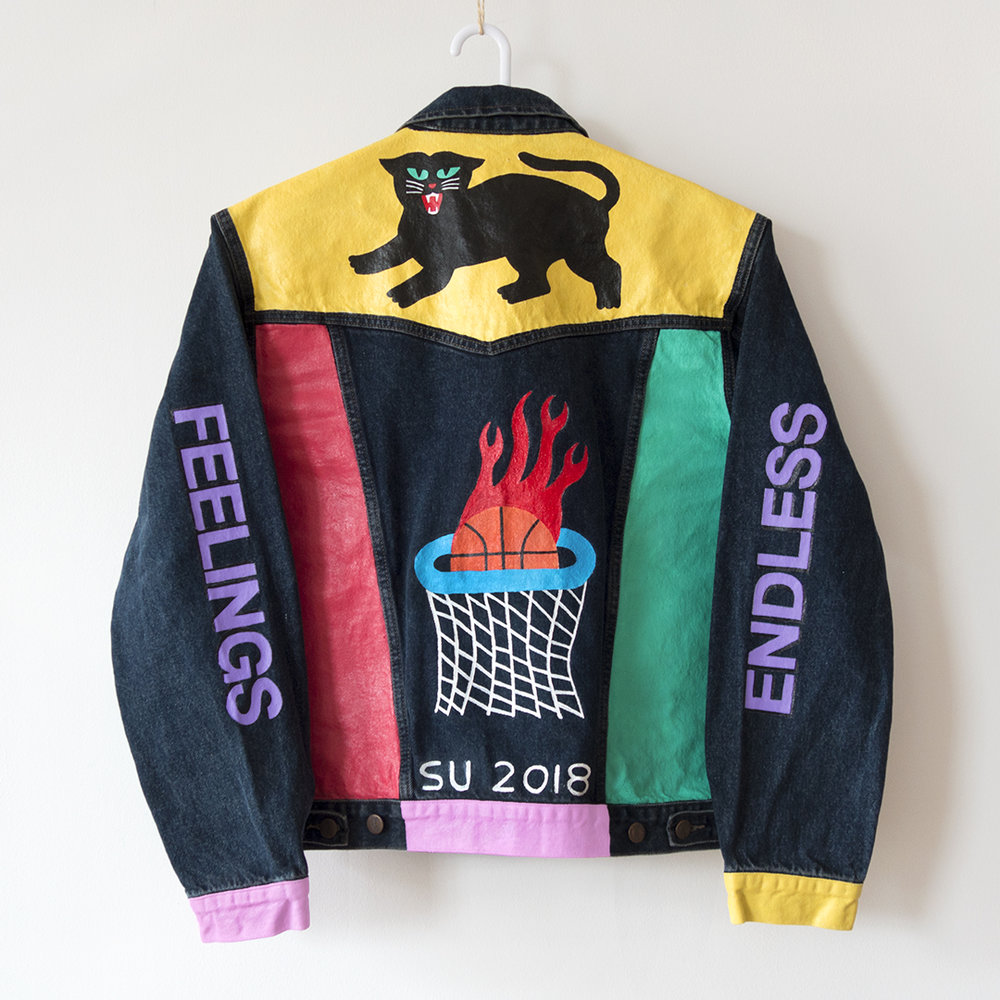
Stephanie Unger's illustrations are pure fun and I cannot get enough!
 
An animaged gif illustration with several elements: a text box that says "BRB going to make things equal", the world with "girl power" around it, a woman looking at her phone with the words "love yourself" around her, and a phone with a notification on it that says "time for change"

A photo of a leather jacket that is painted. It has the words "endless" on one sleeve and "feelings" on the other, a black panther on the top panel, and a basketball hoop with a flaming basketball going through it.
 

The Receptionist Delivers!
Sign up for my email newsletter for a bi-weekly digest and bonus content!
This Week's Delight & Gratitude Roundup

An animated gif illustration. There is a black background and a white speech bubble with the text "thank you" inside it that blinks on and off. Around the speech bubble are two white stars that wiggle back and forth.
Ivo Adventures
 
 This week I have been grateful for:

Getting some things cleared up with my coworkers so we were on the same page because it makes things SO MUCH EASIER.

A power outage that let me go home in the middle of the afternoon (to work from home) because it made the second half of the day feel so chill.

My friend leading a meditation/scripture reading practice because she holds space so well and it was very peaceful.

Going for a walk with some friends in real life because three dimensions are a relief over two.

Seeing my doctor about an easily-dismissable issue that she has also had and so she was really sympathetic because it felt validating!

Myself for getting my closet shelf fixed and re-mounted securely after it ripped out of the wall because I now have a closet again and also it made me feel capable!

This week's delight:
- A picture of my nephew looking at the snow like a little dreamer.
- Seeing the tail of some creature flip into the ocean--it was probably a seal but maybe an orca? Or a mermaid? Or a sea monster???? It could be anything, really!


The Receptionist Delivers!
Sign up for my email newsletter for a bi-weekly digest and bonus content!
What If We Stopped Hating Our Bodies? How Would That Even Work?

 
I picked it up because I realized that I have, at best, a tense relationship with my body. In some ways, I listen to it, love it, and care for it. In others, I mistrust it, hate it, and try to control it. I have wondered what it would be like to be friends with my body--to fully accept and appreciate it for what it is without conditions or fear. (Maybe you have experienced this? What's it like?)

(By the by, I don't think body hatred is special or exclusive to women. Men absolutely experience the trauma associated with body standards, they just are less likely to recognize those feelings because they also aren't supposed to have feelings in this sweet, toxic patriarchy.)

The main thrust of the book: 

 
According to Hirschmann and Munter, the bad things we think about our bodies aren't actually about our bodies. They are about our lives. When we think, "my belly is huge," we are actually nervous about an upcoming job interview or feeling shame because we had a taboo thought or otherwise feeling anxiety, guilt, anger, sadness, or like a failure.

This masking of our actual feelings and life-issues with body shame has a double-whammy effect: not only do we begin to hate our bodies as the scapegoat for all that unpleasantness, but those feelings are left to drift and fester as feelings do when they are ignored.

Then what happens? We try to make our disgusting, hated bodies smaller by restricting them, disconnecting ourselves from our body's natural hunger/movement urges and teaching ourselves that we don't really take care of our body's needs, destroying any trust we had in ourselves.

Coincidentally, this self-hatred, food restriction, and severing of our connection to our body's natural hunger cycles also may also lead us to compulsively shove food into our mouths when we have feelings we don't want to face.

PHEWF! That's a LOT right?
 
Honestly, I'm not entirely sure I buy their premise that this is always what's going on with our relationship with our bodies (they say it's literally 100%, every single time) , but overall it's a compelling framework.

So what's the answer? There are a few:


1) Affirm your body for the wonderful thing that it is, right now and for all time, no matter what it looks like or its abilities. (This isn't part of their recommended practices, but one great trick is to follow people on social media who have different bodies! It really helps teach your brain to see them positively.)

2) Begin to treat your "bad body thoughts" as a signal and look around your life to see what else you may be upset about. Learn to face what you're really feeling without transferring it to your body or judging/punishing yourself for it.

3) Reconnect to your body's natural hunger and fullness cues by simply allowing yourself to eat whatever your body wants whenever it wants it and stopping when your body is done. Treat all food as equally valuable--there's nothing "naughty" about eating chips and broccoli isn't virtuous or a punishment. (They don't call this intuitive eating, but it's basically intuitive eating.)

4) Prioritize feeling physically comfortable and taking care of yourself in general. Strive to meet all your body's needs and be gentle and non-judgemental of them. This will help you show yourself that you can actually take care of yourself and rebuild trust.

There's a few things I realized while reading this book:


The judgement! I judge myself so often: the things I've said or not said, my feelings, my thoughts, let alone my body. I could do with a bit more gentleness and compassion.

The fear! My first reaction to the idea of letting go of that judgement and truly loving and accepting myself/my body unconditionally is terror! The fear reveals that no matter how much I have rejected the concept of good and bad bodies, those beliefs and judgements are still in there, at least for myself. It's also pretty messed up to think that withholding love will somehow make me better. No one looks at a well-adjusted adult and thinks, "yeah, their parents must have really taught them love is conditional on their performance in life, because they are so emotionally healthy now."
 
As they say in the book:
 
"The truth is not nearly as frightening if you don't have to worry about condemning yourself for it."
 
The work! Learning how to listen to myself, parsing our my body's needs from my emotional needs and honouring both, learning how to trust myself and my instincts and facing what's actually behind the fear that prevents this? That's hard. In many ways, for many of us, it probably feels easier to just live with some low-grade self-hatred and mistrust for the food that keeps us alive than to step into the mess. But the reward? Of living life in harmony with yourself? That's gotta be worth it.

The care! This is a big one! When we care for ourselves in the general sense, we are better able to care for ourselves when specific issues arise. It builds a foundation of trust and support within ourselves so that we don't need to start from zero (or negative 5,211) when something bigger comes up. I have been practicing this in general over the past year and wowwwwweeeeee it makes a difference. Treat yourself like a precious object. One that deserves to have its needs met, physical comfort, and care. It actually makes you stronger.
 

The Receptionist Delivers!
Sign up for my email newsletter for a bi-weekly digest and bonus content!
What if Personal Growth Was About Discovering and Honouring Yourself Instead of Fixing What's Broken?

When you think about improving yourself, is it because you are broken or in some way faulty? Is there something wrong with you that you need to fix? Is it because if you fix this one problem, you'll be happier? Possibly via being more loveable or more productive or wealthier?

I've written before about the idea of approaching our self-improvement from the radical stance of not being broken--that we can like (or even love!) ourselves while we encourage healing and growth in our lives.

Now I am here to share a counter-paradigm to that brokenness that can help support our growth through a lens of love: what if we view personal growth as a method of knowing and honouring ourselves?

This comes from Catherine Andrews' Sunday Soother newsletter.
 
She actually says that growth can be knowing and honouring our souls, which gives just enough separation for those of us who may still struggle with fully loving ourselves, even though our souls are basically just us, concentrated. Us in our purest form. Us when we are swimming in enough love that self-doubt fades away. Us when we are sure. Who wouldn't want to get to know that version of themselves?
 
She specifies what this kind of growth looks like:

Discovering who we are, instead of fixing who we are
Trusting our intuition instead of outsourcing our improvements
Feeling and doing good, instead of trying to BE good
Being kind to ourselves instead of striving to prove ourselves to others
Understanding our authentic individual values instead of trying to live by some monolithic approach of what's right for everybody
Going after goals that inspire us, instead of goals that somebody else told us we should aim for
Having our own backs and developing self-trust instead of living by somebody else's needs or expectations
Listening to our hearts instead of trying to be "logical"

Sounds good to me. I'm going to start by asking myself why I am trying to do a thing whenever I set out on a self-improvement tangent.


The Receptionist Delivers!
Sign up for my email newsletter for a bi-weekly digest and bonus content!
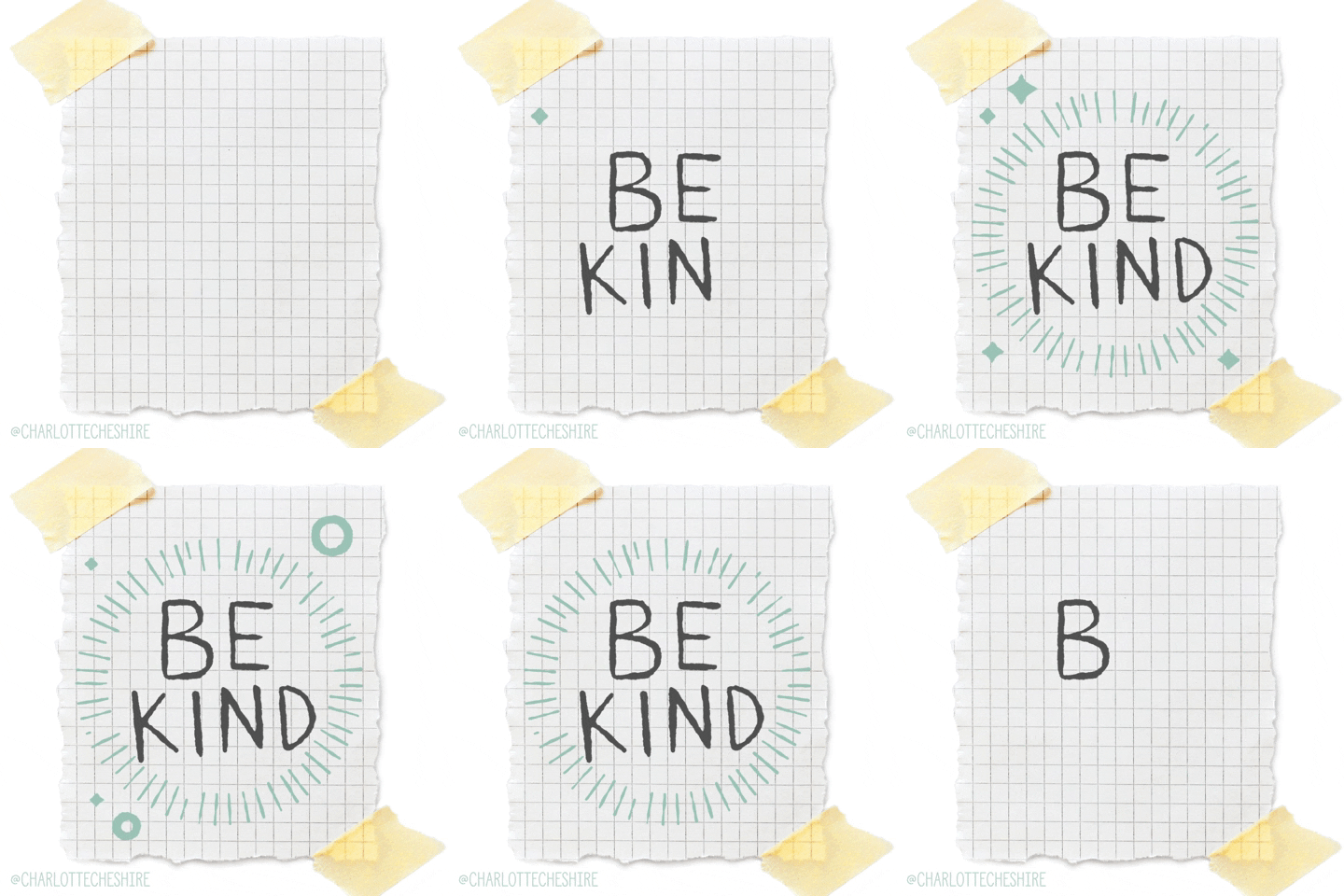
One Kind of Kindness

"And then there is the kindness of dignity. Of giving someone the benefit of the doubt. The kindness of seeing someone for the person that they are and can become, and the realization that everyone, including me and you, has a noise in our heads, a story to be told, fear to be danced with and dreams to be realized."

 When I say I am looking for kindness in a romantic partner, this is one of the things I mean by that. It's not just about being nice to strangers.
 

The Receptionist Delivers!
Sign up for my email newsletter for a bi-weekly digest and bonus content!
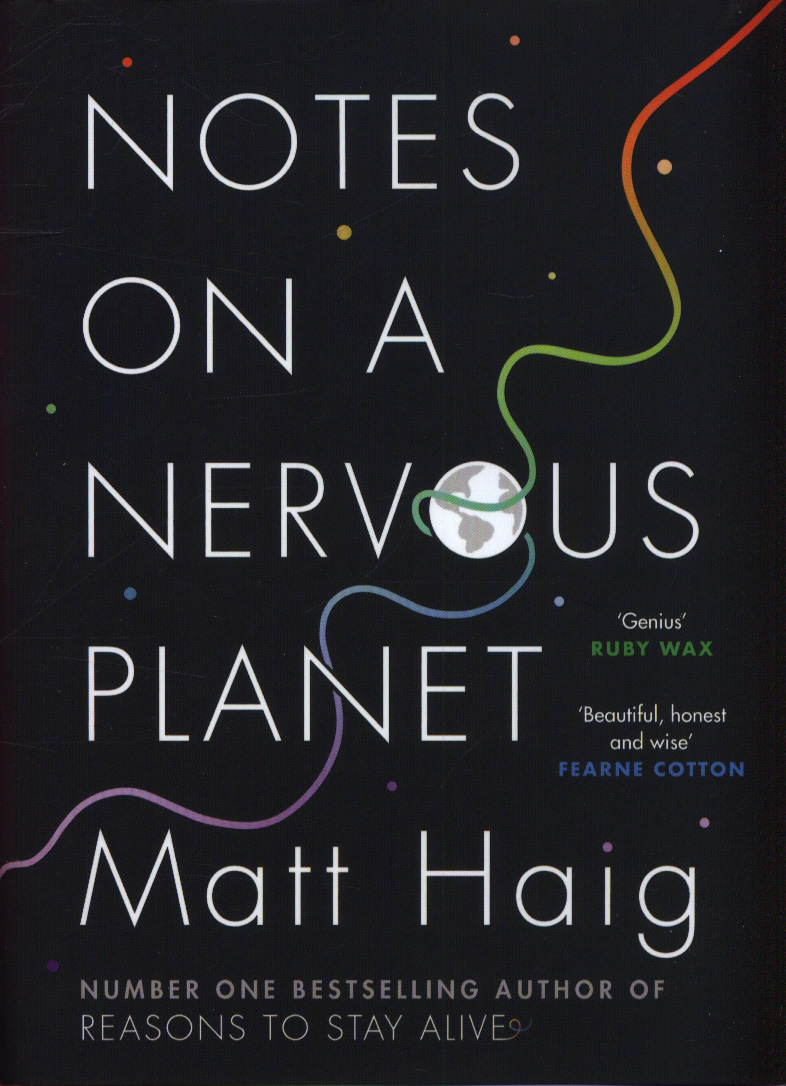
Notes From Notes On a Nervous Planet

An image of the cover of the book Notes on a Nervous Planet by Matt Haig. The background on the cover is black and it looks a bit like the universe. The "O" in "nervous" is a planet and there is a colourful line that goes diagonally across the book, wrapping around the planet before wandering off the other side.

I really enjoyed reading Matt Haig's Notes on a Nervous Planet... up until a point. This happens to me a lot when reading a collection of short stories or, in this case, a set of essays all riffing on the same theme. At some point, my brain just kind of goes, "yeah, I got it," because it's not necessarily making any new points.

HOWEVER! It's still really great and worth reading because there are a host--A HOST!--of wonderful little insights and ideas floating around in there.

Here are a few of the bits I highlighted while reading:

"If the modern world is making us feel bad, then it doesn't matter what else it has going for it because feeling bad sucks."

(This is something I have felt for a long time! What's the use of all these great advancements if people are miserable?)

"Having access to information gives you one kind of freedom at the expense of another."

 (I think we saw a perfect example of THAT over the past year.)

"We would do well to remember that the feeling we have these days--that each year is worse than the one previously--is partly just that: a feeling. We are increasingly plugged in to the ongoing travesties and horrors of world news and so the effect is depressing. It's a global sinking feeling."

 (Seriously though, is the world getting worse or do we just know all the terrible things now?)

"One thing mental illness has taught me is that progress is a matter of acceptance. Only by accepting a situation can you change it."

"Illness has a lot to teach wellness. But when I am well I forget these things. The trick is to keep hold of these things. To turn recovery into prevention. To live how I live when I am ill, without being ill."

(Both of these last two quotes can be held together, I think. They also have something to tell us about what we can do as we emerge from the pandemic. Remember at the beginning when we were all taking our mental health really seriously, going for walks, stretching, and finding other little ways to make sure we didn't lose our entire sense of humanity? Those things will still be good for us later, when we have everything that used to distract us from the emptiness in our hearts.)

"Enjoy the internet. Don't use it when you aren't enjoying it."

 (And yet.)


The Receptionist Delivers!
Sign up for my email newsletter for a bi-weekly digest and bonus content!
This Week's Gratitude & Delight Roundup

An animated gif illustration. There is a black background and a white speech bubble with the text "thank you" inside it that blinks on and off. Around the speech bubble are two white stars that wiggle back and forth.
Ivo Adventures

This week I have been grateful for:

A friend who picked up a faux plant from Ikea for me and when I picked it up from her it was way lighter than expected because it was so much easier to carry home.

Going to bed with my body tired from physical activity because it felt so good.

Got an article written and submitted because it was hanging over my head.

The person who accidentally took a key home from work was able to return it quickly because I didn't have to troubleshoot and it was a relief.

A board member's generous and caring response when I contacted her with an issue I didn't know what to do with because it felt like she really cared.

D&D! Because it is always fun and the friends I play with feel like familiy.

Good weather for biking to and from work because that makes life more pleasant.

Seeing my bestie for video chat happy hour because I got to see her dang face!

Being outside in the sun because it makes me feel alive.

A great staff meeting where we came up with some awesome ideas together because it feels like we are working towards something.

This week's delight:
- Grocery shopping with a toddler who danced while pushing the cart and noticed when the music was too quiet to dance to.
- The woman who ran out of the IGA to feel the sudden hailstorm.
- The movie Mars Attacks!


The Receptionist Delivers!
Sign up for my email newsletter for a bi-weekly digest and bonus content!
What's Your Role?

February is Black History Month. It's as perfect a time as any to reflect and re-up on your anti-racism commitments, with a specific focus on anti-Black racism that may be present in you and the world around you.
 
(If you have yet to start doing this work, then by all means! Why not get started??? It's like that old saying about planting trees, "The best time to plant a tree is twenty years ago. The second best time is today." You can't go back twenty years and start then, nor can you go back twenty times twenty years to change what your ancestors did, so I guess you just have today.)

One useful question to ask yourself as you reflect on your contribution is simply, "What's my role?" How do we, as individuals with our own specific interests and skills, contribute to the work?
 
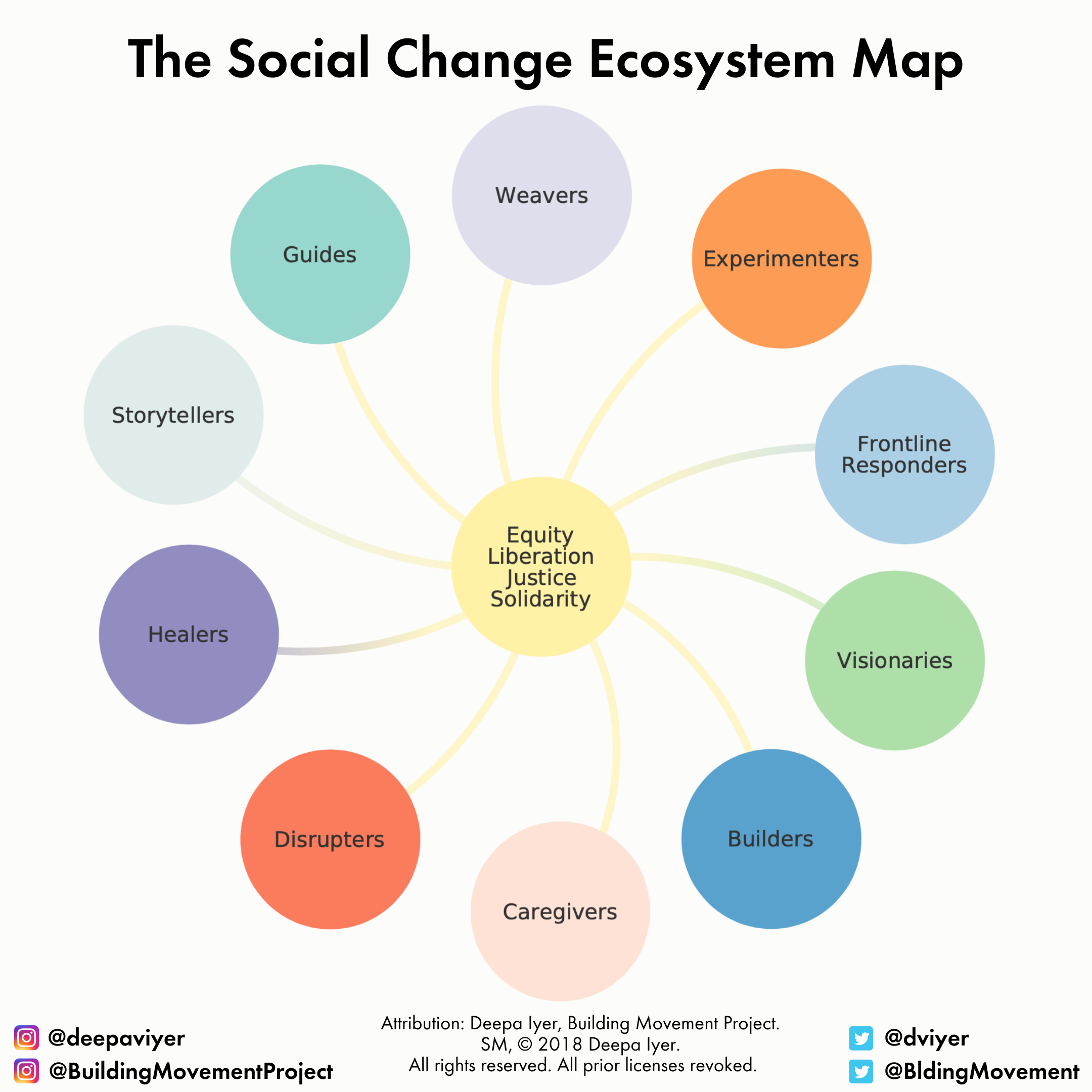
To answer that question, try The Social Change Ecosystem Map, developed by Deepa Iyer with the Building Movement Project.

An image of a "map", the text says "Social Change Ecosystem Roles", in it there is a central circle that says "equity, liberation, justice, solididarity" and around it are multiple circles with roles that work towards that goal, each one connected to the central circle by a flowing line. The external circles, or roles, say: weavers, experimenters, frontline responders, visionaries, builders, caregivers, disrupters, healers, storytellers, and guides.
Deepa Iyer, Building Movement Project. SM, © 2018 Deepa Iyer.
All rights reserved. All prior licenses revoked.

Iyer has created an EXCELLENT framework and guide to identifying your own role. Check it out. I am carving out some time this weekend for myself to go through her worksheets, answer the questions, and reflect more deeply on my role as I continue to grow in this work.


The Receptionist Delivers!
Sign up for my email newsletter for a bi-weekly digest and bonus content!
Cyril Lancelin's Delightful Installations

Artist Cyril Lancelin makes some pretty wild and wonderful installation art pieces. I would love to encounter one of these in real life!

A photo of a large installation artwork by Cyril Lancelin. It is a giant pyramid made out of large pink balls with a heart-shaped tunnel going through the base. The pyramid is in the middle of a large, green field.

A photo of a large installation artwork by Cyril Lancelin. It is in an atrium-like space and is made up of a bunch of giant, green vegetables: watermelon, squash, zucchini and so on. They are arranged in a way that looks quite haphazard all through the three dimensional space, with some spaces where someone can walk into this cloud of giant vegetables.


The Receptionist Delivers!
Sign up for my email newsletter for a bi-weekly digest and bonus content!

Things We Can Feel So Strongly We Want Everyone to Feel This Way and Forget Their Lives Are Different

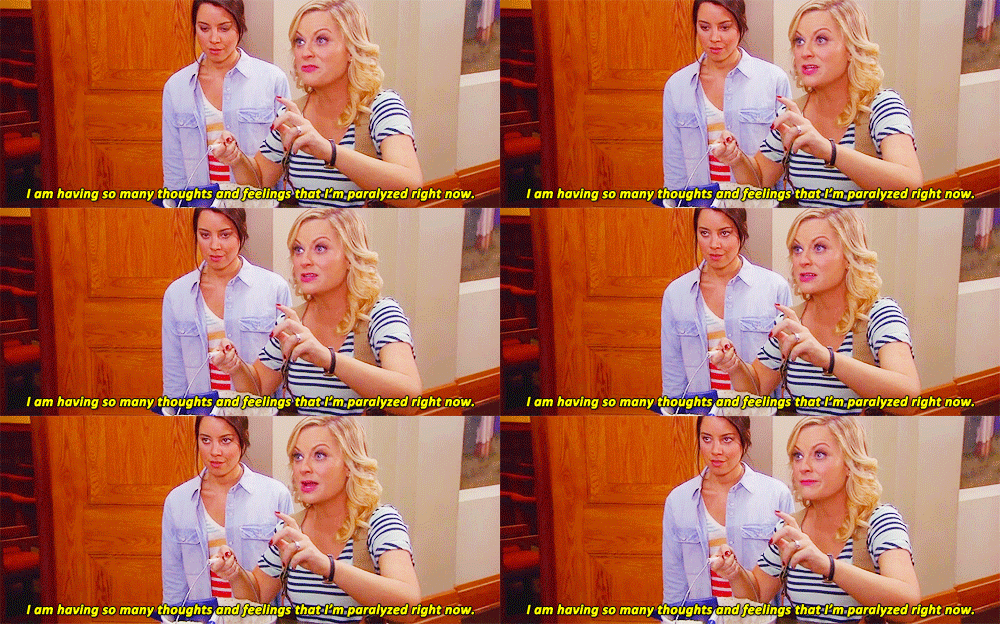
An animated gif clip from Parks and Recreation. Leslie Knope is standing still with her arms out and the text says, "I'm having so many thoughts and feelings that I'm paralyzed right now.
Giphy

1) Overwhelming love for our parents or children or even siblings. The kind that makes us tell other people that it doesn't matter what's going on, family is precious, call your parents or child or sibling and tell them you love them, not knowing whether that person has family, loves their family, or is loved back by their family.

2) More overwhelming love for our children. The "I can't imagine living life without this love" kind of love that drives us to tell other people they should be having children as well, not knowing if they want kids, are unable to have kids, or had kids who rejected them.

3) The joy of doing a job that feels like it aligns with our life purpose and doesn't feel like work and so we tell everyone to follow their bliss and do what they love so they never work a day in their life even though we have no idea what their financial and professional realities might actually be. Or whether they get similar satisfaction in other parts of their life.

4) The bliss of new love/infatuation when you feel like the world was made for just you two and you start telling other people to do whatever it was that you did to find your partner. (Get on the apps! Get off the apps! Date someone you think might be boring but it turns out they're just stable! Act casual! Be direct!)

5) The ecstasy of finishing a really tough physical activity that leads us to think everyone needs to just get off their butts and climb a mountain or sign up for crossfit because it's so achievable and you did it and so can they! (Even if there are many reasons why they can't or don't want to.)


The Receptionist Delivers!
Sign up for my email newsletter for a bi-weekly digest and bonus content!