Showing posts with label relationshipping. Show all posts

Have You Ever Heard of an FLR?

Have you ever heard of an FLR?
 
I hadn't until recently, and if I have to know about this, so do you.

FLR stands for Female-Led Relationship. But it's not what you think. (Or it's exactly what you think. It depends on what you think.)

According to a dude on Hinge (that's a dating app, for those of you who are lucky enough to be ignorant about these things), and then confirmed by my google searches, FLRs can be a lot of things.
 
Some FLRs are exactly what they sound like: a heterosexual relationship where the woman is in charge. She makes the decisions, earns the money, and tells the man what to do. (Or is "exactly what it sounds like" a lesbian relationship, because that's led by two females? Except I feel like only straight culture comes up with this kind of nonsense.)
 
However, FLRs can also be relationships that are egalitarian.

That's right. A relationship where both parties have a say in decisions, have jobs, and participate in the housework and generally do life together is considered female-led. Even if it was actually perfectly equal, it would be an FLR.

That's because FLRs are defined, actually, by what they're not: male-led relationships. Apparently, these are standard. Normal. And while I'll be the first to agree that the patriarchy still exists and that almost all hetero relationships include a man who doesn't do his share of housework or childcare or emotional labour, these folks think that the strictest "traditional" gender roles in a relationship have always been that way (nope) and are still the norm (nooooo) and that doing anything slightly different from that suddenly means the woman is in charge, even when she's not (?????).
 
Can we sit with the wrongness of this for a second?
 
Sit with it some more.
 
Keep sitting with it.
 
Okay, now let's make some observations and ask some questions.
 
First of all, how dare you?
 
Second, why the heck does a relationship have to have a leader? And if it is equal whyyyyyyyyy would you label that as being led by one person???? This is false advertising.
 
The insistence on gender roles so strict they are almost a parody of the real thing and unnecessary labelling of relationships makes me think that this whole thing is mostly populated by the men who, if they weren't getting relationships, would become incels.

To be fair, a lot of the stuff I read about FLRs online is actually really positive about women's empowerment and even recognized the truth that patriarchal relationships also kind of suck for men because being in charge and emotionally cut-off is not great for, you know, feeling loved.
 
BUT it's all set up in this way that is so backwards and so obsessed with "innate differences" between men and women! The guy I spoke with on Hinge actually told me he was SURPRISED to find that he enjoyed doing things for his partners when he tried an FLR.
 
Surprised. That doing things, for his partner, was enjoyable.

I don't know. I guess if this is a part of a dude's journey away from rampant sexism that's great. But I don't want anything to do with it.


The Receptionist Delivers!
Sign up for my email newsletter for a bi-weekly digest and bonus content!

Is Anyone Actually Impressed by the Number of Countries You've Been To?

As I get older, I have noticed a drastic increase in the number of men whose entire online dating profile is about the countries they have been to and oh dear me, are the only ones who are left are the ones who spent all their adult years travelling and have no roots or community or stability or sense of home and think that the number of countries they have been to actually makes them a more interesting person?

Either that, or there's the guy who shared that his wife died of cancer three months ago and now he's looking for a new partner. THREE MONTHS AGO.

Three.

I just...


The Receptionist Delivers!
Sign up for my email newsletter for a bi-weekly digest and bonus content!
The Rhythm of a Relationship

When I look back at my past relationships, there are a couple that I can see were kind of doomed from the start (or at least from early on). There are a few bits of evidence of that, but here's a new one I just came across: we couldn't find a rhythm together.
 
Everyone has a rhythm for how they live their life. The way they like to organize their days, the flow to how they fit in grocery shopping and laundry, their bed and waking times. It is, as Toku (the author of the post linked above) says, "the beat of your life."

So when people get together, a rhythm develops for the relationship and how you do life together. This is great! We change our rhythms all the time, and it can work really well, like when we realize we need to stop ordering takeout and find a new joy in cooking. Or when we realize we will always hate cooking and give ourselves the gift of ordering takeout more often.

The problem is that sometimes there is no rhythm that feels right to both of you. You either both try to compromise, jointly butting up against the unnaturalness of your attempted rhythm together, or one person completely adapts to the other.
 
It can feel like a loving act to give up your rhythm for your partner. And it is. It's a beautiful sacrifice of love that is going to leave you doomed. Our rhythms are a reflection of our needs and ignoring yours to fit someone else's entirely is like when we all adapted to live under COVID restrictions: we can do it, but we aren't exactly yearning to celebrate a lifelong union with the pandemic.

This was the issue with my last serious partner. When I tried to change my rhythm to match his bedtime and quiet needs, I felt trapped and constrained. When he tried to change his rhythm to match my social and activity needs, he felt overstretched and anxious. When we tried to find a middle ground, we barely spent any time together, which also felt bad (because, you know, we loved each other). We couldn't find a rhythm.

Maybe we could have kept working at it and found a rhythm that worked for both of us. In reality, though? I think that would have left both of us resigning ourselves to a life that never really fit. Our rhythms were too different.


The Receptionist Delivers!
Sign up for my email newsletter for a bi-weekly digest and bonus content!

Friends, Waffles, Work

A photo of two young men, one has his hand on the other one's shoulder and they are smiling
Nonresident

“Life will present you with unexpected opportunities, and you won't always know in advance which are the important moments. Above all, it's the quality of your relationships that will determine the quality of your life. Invest in your connections, even those that seem inconsequential.”
-Esther Perel

This has been my approach to life for a very long time. When asked what gives my life meaning, I would almost always answer my friends, my relationships, my community.

On one hand, it's totally true and I have some very meaningful relationships which one could say means I have a very meaningful life. (I would say so as well!)

On the other hand, it also led me to holding onto more relationships that a person can effectively maintain with any meaning. At some point, I had to actually decide which friendships I was really going to invest in, which may have involved some gut-wrenching priority-setting.

Also, on that other hand, I have often chosen friendship over pursuing work, which is usually the right decision, but perhaps not the right decision every single time.

Still, Mr. Perel's wisdom is where it's at.

Or, as Leslie Knope says, "We have to remember what's important in life: friends, waffles, work."


The Receptionist Delivers!
Sign up for my email newsletter for a bi-weekly digest and bonus content!

Life-Changing Advice From a 90's Woman's Magazine That I Can't Forget Even When I Try

A yellow square with the word "never" in large type
Photo by Chris Piascik on Foter.com / CC BY-NC-ND

When I was a kid, I used to read my mom's lady magazines. (Wait, that makes it sound like they were scandalous. What I mean is, my mom got Ladies' Home Journal. It has "lady" in the title. Officially a lady magazine.)

One of my favourite columns was called "Can This Marriage Be Saved?" Couples would write in with their issues, each taking a turn to describe the problem from their perspective, and then a therapist would give their take. (Yes, as a child I was reading couple's therapy columns for fun. Feel free to decide what that means about me.)

In it, I got an incredible piece of advice that has stuck with me to this day: strike the words "always" and "never" from your vocabulary when talking about another person. 

People are just not that consistent. We may do something a LOT or hardly EVER, but the fact is that there are always exceptions. And so guess what happens when you claim an absolute? Those exceptions pop into the other person's head and BAM! The opposition intensifies. 

Basically, our nevers and alwayses will always (ha!) be wrong, and not only that, they'll put the other person on the defensive and drive the argument towards nitpicking statistics of activity instead of whatever it's actually about.

As an extension of this, I am automatically suspicious of anyone who claims "always" or "never" status for themselves.

I am sharing this with you because:

a) I think it's good advice that everyone could use, and

b) I truly don't understand how some snippets of information we receive stick with us so effectively while others are completely lost. Why did this thing I read ONCE as a young little thing get ingrained so deep in my psyche it actually permanently changed the way I argue and yet it takes ongoing effort to remember to look at my to-do list?


The Receptionist Delivers!
Sign up for my email newsletter for a bi-weekly digest and bonus content!

Making Romantic Rejection Way More Fun

An animated gif with the text "it's not me it's you" in multicolours
Giphy

I've decided to start re-casting all my romantic losses in a more entertaining light.

Now, instead of people meeting me and (somehow) not instantly falling madly and desperately in love with me, doing everything in their power to keep me, they simply had some random dealbreaker that they just couldn't get over and doesn't that make rejection more fun?

The rules are that it has to be something that actually kind of bugged the person (or at least that you could legitimately imagine bugging them) and not actually the reason they gave you for not wanting to date. And it can't be something that makes you feel even a little bit bad about yourself!

Now, instead of a bunch of men who, basically, didn't have strong enough feelings for me (legitimate, but also whatever), we have the guy who couldn't handle that my bookshelf is arranged by colour; the one who couldn't get over the fact that my bathroom was mid-renovation and had a plywood floor; the guy who loved everything about me except the fact that I decided to get a cat and not a master's degree, which he genuinely saw in opposition to one another (okay, that one's a cheat, that's actually almost exactly what he said to me...)

Honestly, it does make rejection more fun.


The Receptionist Delivers!
Sign up for my email newsletter for a bi-weekly digest and bonus content!

Two Beers and a Puppy

This is from a book called Works Well With Others: An Outsider’s Guide to Shaking Hands, Shutting Up, Handling Jerks, and Other Crucial Skills in Business That No One Ever Teaches You by Ross McCammon.

A photo of a page from a book. It's a chapter called "two beers and a puppy", describing how you can test how you feel about someone by asking yourself if you'd like to have two beers with them and if you'd let them watch your puppy.


If you're not sure how you feel about someone, ask yourself two questions: would I have two beers with this person (aka: are they fun?) and would I let this person take care of my puppy for a weekend (are they responsible?). The answer could be no and no, yes and no, no and yes, or yes and yes.

And now you know, if this is a person to avoid, a person to have fun with but not trust with a lot of responsibility, a person who's not very fun but trustworthy, or someone you like to hang with AND trust.

Honestly, in most cases I don't think doing the "two beers and a puppy" test on someone will lead to a revelation or surprise, but it's a fun way to be more explicit with yourself about your feelings.


The Receptionist Delivers!
Sign up for my email newsletter for a bi-weekly digest and bonus content!

I Found a New Way to Get Un-Stuck From My Wish-Fulfillment Mental Loops

A photo of a wall with a neon sign that says "we are all made of stories"
Photo by Social Cut.

I don't know about you, but when I'm not happy with how something is going in my life, my brain (or maybe my heart?) often goes ahead and imagines an alternate reality where it just magically works out. It's nice in theory, except that I inevitably wind up getting stuck in this little wish-fulfillment story as my brain cycles through it over and over, getting sad over and over that it's not really happening.

This can materialize over anything - work, friendships, my home, but it's the stickiest when it comes to dating. Probably because dating involves an outcome I powerfully desire (finding sweet, sweet love) that requires both random chance and a whole other person whose actions I cannot control and thoughts I cannot read and may or may not ever show up in my life.

In the past, my efforts have mainly been focussed on shutting these stories down. I remind myself that they aren't real and that I have to act based on what people are doing, not what I imagine they might be secretly thinking. (To quote my book, "actions speak louder than the stories you make up in your head.")

The Women Who Keep Men In Check

An animated gif of Jennifer Lopez crossing her arms in an annoyed huf.
Giphy

I recently met the female coworker of a male friend of mine. Afterwards, he said, "Now you know the two women who keep me in check." (The other, of course, was his wife.)

This statement kept coming back into my brain like a sneaky little cartoon tentacle to bug me.

It's part of the patriarchy that annoys me most: the part that makes women responsible for the behaviour of men. The part that almost, sort of, sounds like the woman has authority but doesn't actually give her any power at all.

It's why a number of women I know who had professional careers before having children questioned going back to those careers where they were expected to be mom at home AND mom to a bunch of grown men at work.

It's a branch of the "men are head of the household but women are the neck" philosophical tree, which people love to use to say that women actually hold the power in a relationship. (Except, of course, for the power of actually being the leader and being able to openly make decisions or use authority at all.)

It's exhausting.

(Also if we haven't yet collectively gotten over the idea of a "head of the household", can we do that now, please?)


The Receptionist Delivers!
Sign up for my email newsletter for a bi-weekly digest and bonus content!

Falling in Love

“If you think falling in love is only reserved for romantic relationships, then you’re missing out on so much.”
— Ayishat Akanbi

I am so in love with my friends it's ridiculous and awesome.


The Receptionist Delivers!
Sign up for my email newsletter for a bi-weekly digest and bonus content!
What to Look for Instead of Red Flags

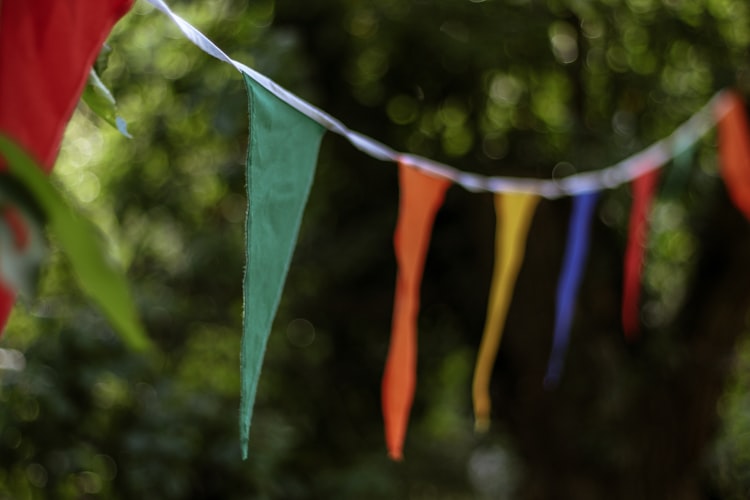
A multi-coloured bunting hanging in the forrest with a red, green, orange, and yellow flag. The green flag is in focus.
Photo by Manuel Hoster.


We all know to be on the lookout for red flags in relationships, but what about the green flags? The things that make you go, yep, this person is a good idea? We don't really talk about those, do we?

That's why I got so dang excited when I saw Sharon Peykar's Instagram post about relationships that starts with the green flags: it gives a framework beyond "this feels right." Of course, something "feeling right" is absolutely worth paying attention to, it's just nice to have something to measure it against, since our desire for connection and care from others mayyyyy sometimes cloud how we read those feelings. (Or is that just me?)

(Also, if you're still worried about red flags, she lays some of those out too on the next slide - just click the little white arrow on the post!)


As with all relationships advice, this info can be used to reflect for more than just the person you're interested in dating:

What about your relationships with friends, family, and coworkers?

Romantic relationships are far from the only relationships that matter and as much as romance can feel high-stakes (many of us, after all, are trying to pick ONE PERSON with whom we are going to procreate and spend THE REST OF OUR LIVES. No pressure!), these other relationships impact our lives in a big way. We want to pick the right people to bring into our inner circles and invest in them. After all, I want my besties to be around my entire life, too, not just the person I might marry.

What about your relationship with your own dang self?

Have a look at those green and red flags for yourself. Do you support personal growth in yourself and others? Do you practice self-care, reflect, invest in longterm friendships, honour boundaries, and/or have some hobbies? Or, on the red side, do you criticize, avoid empathy, or manipulate yourself or others?

How can you create more space to cultivate some green? How can you begin to address any red that's in there?

I would start by focusing on adding green before you try to eradicate the red, though. It'll be more pleasant AND it'll crowd out the red stuff. If you can be strategic and pick a green thing that's the antithesis of any red in your life, that sounds like a brilliant place to start.


The Receptionist Delivers!
Sign up for my email newsletter for a bi-weekly digest and bonus content!

Dating Friends and Friending Dates

What if we treated our friends more like dates and our dates more like friends?
Photo by Priscilla Du Preez

You may have noticed that I'm kind of obsessed with friendship lately - well here's another interesting idea connected with friendship that I have recently come across: to treat our friends more like people we are dating and the people we are dating more like friends.

What this means is that our friends deserve the loving attention, special quality time, and prioritization that we can give our dates, and that our dates deserve the allowance of space, understanding, and reduced pressure that we give our friends.

I like this idea!


The Receptionist Delivers!
Sign up for my email newsletter for a bi-weekly digest and bonus content!

A PSA to Parents, From Your Friends Who Don't Have Kids

Hey parents, your friends who don't have kids still like your kids!
Photo by Sai De Silva.

I recently had a conversation with me about a friend of mine who is also a single, non-child-having person about how much we love our friends' kids.

We aren't biased or anything, but our friends clearly have the cutest, smartest, most promising kids in the whole dang world. We love the opportunities we have to be a part of their lives, spoil them like aunties, and join in our friends' family activities.

Of course, we also love when we get some alone time with our friends and can have adult conversations, but we know that won't be every time and we are VERY okay with that!

Why am I sharing these not-so-hot takes about the fact that we aren't jerks to our friends' kids? Because we also discussed how it sometimes feels like our friends think that we resent the fact that their kids' existence has had an impact on their lives. We don't!

FRIENDS WITH KIDS: PLEASE STOP APOLOGIZING FOR YOUR KIDS' EXISTENCE!

Your friends get it!

We get that our conversation will be interrupted a billion times by your children. We get that all things revolve around bedtime. We get that exposure to germs is now a very big deal. We get that your apartment will be a mess of kids' stuff for a long, long time. We get that it will take 20 minutes to walk somewhere that would normally take us 5.

We get it! We are cool with it! We LIKE it, even!

Basically, you can feel free to stop projecting whatever fears you have about being annoying or not enough or whatever it is onto us and just let us continue to be your friend in this new phase of life. We are here for it.


The Receptionist Delivers!
Sign up for my email newsletter for a bi-weekly digest and bonus content!
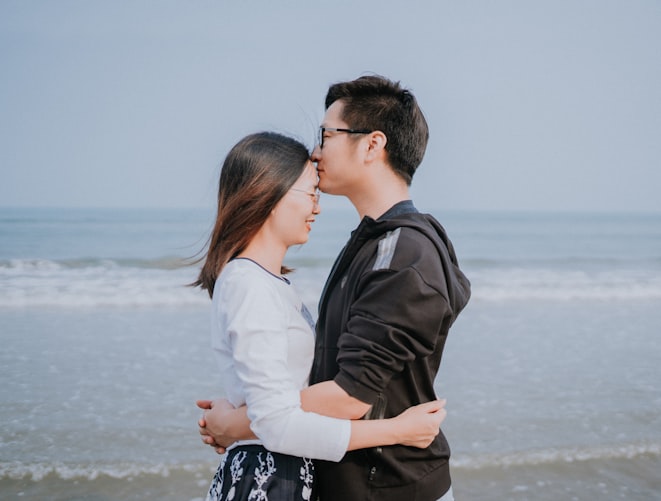
One of the Best Pieces of Relationship Advice I Have Received

How do you know what to look for in a romantic partner?
Photo by JD Chow.

When thinking about the traits you want in a romantic partner, it can be easy to get a little sidetracked or stuck on the details. (You don't have to share every interest, but you should share some, right? But how many? And which ones? What about your traits? Which do you want to share and which will benefit from someone who takes a different approach? How many are essential and how many are nice to have?)

My mom recently gave me a wonderful piece of advice: she said to look at my closest friends and use them as a framework when I consider what kind of person I would like to be with romantically.

This is quite possibly the best piece of romantic advice I have ever received!

Your closest friends are the people you have chosen to be in your life, hopefully for the long haul. You are obviously compatible with them. You have fun together, you support each other through harder times, and most likely share some core values.

Of course it's different to be with someone in a romantic relationship than a friendship, but what a great place to start. After all, everyone loves to post about how they are "marrying their best friend" on their Instas the morning of their weddings, and how much better if it's actually true! (Okay, okay, I'm sure everyone who posts that at least believes it's true at the time.)

It's possible that you never think that much about what you're looking for and just go out into the world meeting people and enjoying life, which sounds both like it must be fun and also like my nightmare.

I am a planner. I like to think things through and be intentional with pretty much everything, including (and maybe especially) the kind of person I might spend my life with. This doesn't mean that I create a hard-and-fast chart to rate each date against (although heck, that might be useful), but it does mean that I find it very helpful to have an idea of what I'm looking for in advance. After all, there are a lot of feelings involved in dating, and some of them don't actually have your best interest at heart.

So excuse me while I go analyze all my closest friends for common traits and create a complex scoring rubric for all future dates! I should probably just get them to fill in a personality test, right?


The Receptionist Delivers!
Sign up for my email newsletter for a bi-weekly digest and bonus content!

Forced Intimacy and Desire Without Enjoyment

Photo by Alexis Fauvet.

One more post about Emily Nagoski's excellent book Come As You Are: forced intimacy and desire without enjoyment. (The two earlier posts are here and here.)

In the book, she talks about how most people, when they are stressed, have a decreased sex drive, but for a small number of people, their sex drive increases. The interesting thing is, for those people, there usually isn't an increase in pleasure or enjoyment from sex, just increased desire.

I had never thought about the concept of desire being separate from pleasure before. Whether the context was sexual or not, I had always assumed that pleasure was a pre-requisite for desire, or at least the expectation of pleasure. You had to at least think you were going to enjoy something to want it, right?

Turns out, nope.

At this point, it's more of a compulsion than anything else, and is about Nagoski refers to as "forced intimacy": any kind of intimacy-producing activity that's done to fill a hole inside of us, instead of out of a desire to connect with the other person.

This concept of forced intimacy was a huge lightbulb for me.

In a past relationship, I went through a really stressful time. I asked my partner to sit on the couch and cuddle for five minutes every morning before we went to work. It wasn't about him or our connection, it was about this giant ball of stress inside of me that I was trying to calm. Or really just smother.

Cuddling is typically my favourite thing to do in a relationship, but this time it didn't actually feel all that enjoyable. Now I know why! I was trying to use them to fill an entirely different void in my life. I was taking one of my favourite intimate activities and trying to make it into an anti-anxiety pill.

Unsurprisingly, my partner didn't particularly enjoy it either. Who really likes being used to try to fill someone else's unfillable void?

I'm pretty sure forcing intimacy to try to cover up or fill a hole in our hearts is a fairly human thing to do, and that I'm not alone in this one. The big question is, what do you do instead?

As per usual, it's probably that you face down the giant hole inside of you and work through it instead of trying to use someone else to cover it up. Sigh.


The Receptionist Delivers!
Sign up for my email newsletter for a weekly digest and bonus content!
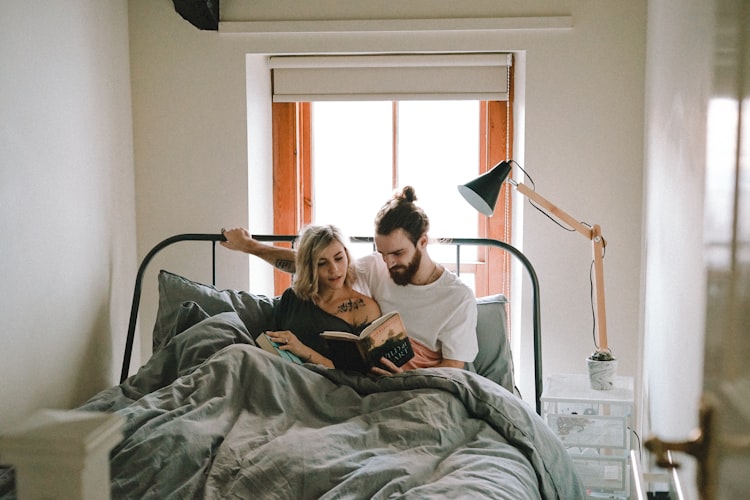
On Relationships, Dr. Phil, and Caretaking

I came across this powerful post on Facebook about caregiving in relationships by Rebekah Taussig, who goes by @sitting_pretty on Instagram. I bookmarked the post, it was so impactful to me.


This last bit really gets me:

"I would like the whole world — including Dr Phil — to please stop assuming that being disabled is some kind of alien experience planets away from the rest of humanity. You need some version of care, I need another, and we’re all here just trying our best to sort it out and find connection and love the best we can, forever and amen."

I am totally guilty of this. As soon as the label "disability" is put on something, it is categorized as somehow separate from regular life in my mind. This is absurd, dehumanizing, and kind of laughable. I have been working on being better about this, and will continue to do so thanks in large part to people like @sitting_pretty who generously share their experiences so that I can learn.

Also, I appreciate the reminder of something at the heart of every single relationship: caretaking. People certainly don't get together with others because they have zero needs and are totally fine all on our own. Whether it's providing emotional support while making a big life decision, making sure they actually go to the doctor, or helping them physically when they are unwell, we take care of the people we love.

Maybe what Dr. Phil should have said is, "100% of relationships include caretaking. Some in different ways than others, and some more intensely than others. If you feel like your only role is caretaker, and not friend and lover as well, then perhaps the dynamic is off, but if you are not taking care of each other at all, then do you even care?"

Sometimes this is what caretaking in a relationship looks like.
Photo by Toa Heftiba.


The Receptionist Delivers!
Sign up for my email newsletter for a weekly digest and bonus content!

Focus Group: How Do You Like to Be Hit On?

Photo by Cristi Tohatan.

Flirting is hard! I certainly can't do it, at least not on purpose. (Seriously, as soon as I've ever decided I like someone and that I want to flirt with them, everything falls apart and I say things like "I'm just not looking for a relationship right now" or make eye contact that screams "oh please please please love me do you love me? I am trying to be smouldering, is this smouldering? PLEEEEASE!")

Given how hard it is to flirt with people IN GENERAL, plus the fact that many traditional techniques for hitting on someone have been revealed to be uncomfortable or undesirable or straight up harassment for the recipient, I was curious to know how people actually LIKE to be hit on. I put the call out to my focus group, and now have the ULTIMATE AND BEST FLIRTING TECHNIQUE!

Are you ready? This is it! This is 100% of the data, distilled into one piece of advice on how to flirt:

If you want to hit on someone in a way they will appreciate, all you have to do is make sure the whole interaction recognizes that they are a whole entire person (not just an object of your interest) and that they don't owe you anything.

That's it! You're done!

Here are some supporting quotes, in the words of the 5 women and 1 man who answered my call:

"In general when I sense someone is hitting on me, I get anxious about having to let them down or know I'm not interested in anything more than a conversation. I suppose because it feels like that's the only reason why I'm being talked to, and I don't feel like a person anymore... But I do feel like I banter and am playful with other people (especially actors) when I feel safe doing so... which to me can be a type of flirting."
-Jen

"While it is nice to hear I am beautiful etc... I much prefer the recognition of my gifts and strengths and who I am, rather than what I look like. Speaking as a 44-year-old, I am discovering how the looks are not with us forever. So I would hope that anyone interested would be interested in the long hall and whatever age brings our way."
-Terri

"For me, I think if it could come in some sort of email or text would be ideal, because it gives me some time to think it over. I think in person makes it a little harder because you don't have much time to think before you respond. Ultimately, I am really cool if someone approaches me and says they like me and want to see me somewhere."
-Adam

"I was at a nightclub with a stagette party recently. Groups of drunk girls gathered around a very drunk bride-to-be are generally a target for douches. But instead, we got... one emissary from a group of men who came over, went straight to the bride-to-be and congratulated her on her upcoming nuptials. Politely asked whether his group could join ours. Accepted her answer (nope, because people had driven in from out of town and she wanted to spend time with them) with a smile, and exited graciously. Literally every single woman in our group was drooling over him as he left."
-Chloe

"One time a guy just said as he passed by - 'you've got a really nice smile' and kept on walking. No attempt to pick me up, just a genuine compliment. I suppose if I was interested I could have run after him (I didn't) - I thought that was a nice way to do it. Just a nice comment with no strings attached or expectation from me."
-Kaitlin

"Treat me like a human...I've probably first noticed something physical about you, whether it's your eyes or your amazing shoulders or your delicious butt. ;) Or maybe its a skill - perhaps you're a great dancer or you play an instrument... And when I flirt with you, I'm trying to figure out if the personality, the soul that animates those features is as attractive as the outside. If someone shows genuine interest in ME like this, I will definitely have a good flirt. Touch is powerful, don't use it without thought. Please don't put me down or make light of things I care about and then say its a joke (this happens a lot in Britain and I find it extremely annoying). Please don't play hard to get without leaving me enough crumbs to follow...hot and cold is not my style and is quite offputting. I like a slow, steady burn ;)"
-Francine

COMMON THEMES:

-When the interest is just physical/sexual, it can feel pretty dehumanizing.
-Actual conversation and banter (in the appropriate setting) with no strings attached is super sexy.
-Letting someone know in a low-pressure way that you're into them is super sexy.
-Recognizing the things you like about the person that are not appearance-based is super sexy.
-Giving the person space to think or say no without any expectation is super sexy.

IT'S ALMOST AS IF PEOPLE LIKE BEING RESPECTED AS HUMANS!!! Mind. Blown.

Also, how is this for a super cute flirtation technique?


The Receptionist Delivers!
Sign up for my email newsletter for a weekly digest and BONUS CONTENT!

I Have Found a Vastly Superior Explanation to the Extrovert/Introvert Situation

Photo by Pineapple Supply Co.

I am a super-extroverted person. As you probably know, the prevailing explanation everyone has for what that means is that I am a person who "recharges" or "gets energy" from being with other people, unlike introverts, who get their energy from being alone.

This explanation has always seemed mostly accurate but also lacking to me. The accurate part is that I do mostly feel energized by spending time with other people: I prefer to work in an office or coffee shop where other humans are also doing things than at home by myself; if I spend a whole day without seeing anyone, I start to feel kind of bummed out and lonely; I will often leave a party or hang out with friends feeling super jazzed about life (once I manage to force myself to leave).

However, if I am truly exhausted, I do not want to go to a party. At some point, I do just need some time to myself to relax and just "be". Sure, I may require way less alone time than an introvert, but I still need a night off once in a while. I also don't feel energized by every social encounter. Sometimes, other people are just plain draining, even my favourites.

Sure, you could explain that by saying I'm just not that extroverted, even though spending 12 waking hours without seeing a person makes me feel supremely bummed out. But that also doesn't quite seem right.

My partner, who is super introverted (aren't we a pair!) is another sort-of-fits-but-not-quite to the classic explanation of introverts simply needing time to be alone. It became clear pretty quickly in our relationship that it wasn't just alone time he needed. Sometimes he would have (what I consider to be) a TON of alone time and still feel like he couldn't socialize. Sometimes being with just one or two other people that he knows well (which is supposedly introvert socialization gold) was still exhausting.

Sometimes, I realized that I couldn't use some formula of time spent alone to understand when he would and wouldn't want to be with other people because it involved more than JUST the amount of time he had spent socializing and how many people were there. (I say I realized this "sometimes" because I keep forgetting and having to re-realize it.)

Enter the new explanation: introverts and extroverts have different sensitivities to stimulation.

In this explanation, extroverts are not very sensitive to stimulation and thus require more of it around to feel like we are at a baseline. Without higher levels of stimulation, we feel sad, lonely, and low-energy, so even if we aren't with people, we are more likely to do things like put the radio or Netflix on in the background.

Introverts, on the other hand, are more sensitive to stimulation and so more easily feel overwhelmed and anxious by everything going on around them and prefer quiet environments. They are unlikely to want "background noise" or to be able to tune out a noisy bar and focus on the conversation with the person they are there with.

This explains SO MUCH MORE than just asking someone where they get their energy!!!

First of all, it encompasses ye olde energy argument pretty easily: of course, an introvert is going to feel more drained by going to a party! There is so much stimulation! Their brain has just been stabbed repeatedly by music and lights and the noise of everyone talking as well as all the socializing, and they need to go heal those wounds! And of course, an extrovert is going to be desperate to hang with friends at the end of a day! They are feeling sluggish and understimulated by this boring world!

It also explains so much more than that!

Case in point, my relationship:

Silence feels oppressive to me and relaxing to him. I listen to talk radio every morning while getting ready, and he retreats to the bedroom to have some relative quiet. I prefer to have music, podcasts, or other "background noise" on at all times around the house, he gets overwhelmed by all that noise. If I'm working on something relatively mindless, I will do it in front of the TV because it comforts me, he can't even imagine trying to work on anything with a TV show on anywhere within earshot.

When we went camping for a week in relative quiet, I started to feel antsy, needy, sluggish, and sad. On that same trip, when I put on a podcast for a while in the car, I felt instant relief to have an external voice fill my mind.

Yes, we are an Odd Couple, but not just because I want to have friends over every day and spending a day in the office is all the socializing he can stand! It's because of our baseline sensitivity to stimulation!!!

What about you??? Did this explanation just crack your brain open??? Or did you already know it and you're wondering where the heck I've been??? Or do you think it's total bunk???


The Receptionist Delivers!
Sign up for my email newsletter for a weekly digest and BONUS CONTENT!

What's Your 'Take Me or Leave Me'?

Source: Giphy

One more thing that I thought about watching the musical RENT:

There is a song between Maureen and Joanne, the constantly-quarreling lovers (okay, every couple in this show is quarreling except for Angel and Tom because their love is perfect and thus bound for tragedy) called Take Me or Leave Me.

The basic premise is right there in the title: if you want to be with me, you've got to take me for who I am. If you can't, well then you'd better leave me, because this is it.

It made me think -- what is my "take me or leave me"? What is, at the end of the day, the the list of traits that may not be so great, but come with the package of being with me? The things that a person just sort of has to accept if they want us to be in each others' lives.

Here are a few I can think of:

I am always going to be a person who cries really easily. If you can't handle seeing someone cry, walk away.

I sing in random ways, all the time. Sometimes it's just turning the thing I'm going to say into a song and sometimes a pre-existing song pops into my head that perfectly suits the conversation. Either way, it's coming out of my mouth. I can temper it for different situations (I don't tend to burst into songs at fancy meetings - although at less-fancy meetings it has totally happened), but ultimately, if that deeply annoys you, then you will be deeply annoyed around me.

I am working at taking things less personally, but I still take things pretty personally.

I get very anxious if I have to keep unformed plans in my head and don't get to talk them out, make some basic decisions, and write them down - or at the very least confirm when those decisions will get made.

So there you go! TAKE ME BABY, OR LEAVE ME!!!!

What about you? What are the things about you that a person had better be ready to accept if they want to love you? Not your bad habits or occasional selfish behaviour, necessarily, but things that are a part of who you are?

PS: Just to be a killjoy I will point out that this goes both ways. Anyone we want to be in a relationship with will also have their own things that we have to accept. ALAS!


The Receptionist Delivers!
Sign up for my email newsletter for a weekly digest and BONUS CONTENT!

What if We Treated Our Monogamous Relationships As If They Were Poly?

Image Source: Giphy

I have recently come up with a theory: everyone, no matter their relationship type, should act like they are in a polyamorous relationship.

Not in the sense that we all need to actually become poly*, but in the sense that the poly community has gotten really good at some basic relationship principles that us monogamous folks could learn from.

(NOTE: Obviously just because someone is polyamorous doesn't automatically mean they are good at it. I am going to be speaking in some broad generalities, but it doesn't mean that every polyamorous person you meet is going to be a wizard at all these things --opening up your relationship doesn't instantly make you a relationship superhero. They are, however, the principles that poly relationships are generally built on.)

Communication

Out of sheer necessity, people in polyamorous relationships tend to be really really good at communicating their needs, expectations, and experiences. They communicate in advance of a thing (whether that thing is a new dating partner entering the scene or some adventurous sexual activity). They communicate during a thing. They communicate after a thing. They often schedule in communication to make sure things don't slip through the cracks.

It sounds kind of formal and stiff, to check in so often and schedule communication, but I think we can all agree that most poly relationships aren't characterized by their formal stiffness. Instead, there is a keen understanding that intentional communication is vital to allow for other kinds of freedom.

Facing Feelings

Along the same lines, I think people in poly relationships are way less likely to let bad feelings hang around and fester than us monogos. (Is that a short-hand for monogamous people? Can we make it one?) Again, out of necessity, feelings of fear, anger, envy, or anything else that might feed into jealousy or resentment, need to be looked at and addressed pretty quickly if your multi-person relationship is going to be healthy.

I have found, in monogamous relationships, that there is often a fear or avoidance of bad feelings. Talking about them is hard and scary and can easily wind up turning into something bigger, so we avoid them until we absolutely have to bring them up.

I am sure talking about negative feelings is still sometimes hard and scary in poly relationships, but there is a difference: everyone involved has recognized in advance that these feelings may emerge. They are prepared for some negative emotional responses and are okay facing them and dealing with them - personally, and as a unit.

Including Your Village

The most frequent argument I heard in favour of polyamory is that one person cannot meet all your needs.

That's true, but it doesn't mean you have to be poly. You certainly can if you want to, but either way, it's a good idea to recognize that your partner is not going to meet all of your needs, and that's okay. That's why we have friends and family and coworkers and a whole other community of people in our lives. Invest in those relationships, too. Build a village!

Self-Reflection

This is the "know thyself" section. Healthy relationships are a lot healthier when people know themselves well: their insecurities, needs, desires, boundaries, dreams, and triggers. Even better when they know these things and also how to take care of themselves.

Again, by necessity, polyamory requires a lot of self-reflection. If you're going to open up your relationship, you have to be very in tune with all sorts of things: what you need and want, what you are and are not okay with, where you might feel triggered or insecure, what your emotional response is right now, what might be behind all of these things, and how to deal with it.

Imagine with me a world where everyone knows these things about themselves. Amazing, right???

Recognize Unintended Consequences

Part of all this open communication, self-reflection, and facing of feelings is the recognition that there can be unintended consequences to your actions and that those matter too. Just because you didn't intend to mislead someone or hurt them doesn't mean they don't now feel mislead or hurt. It is more important to deal with that feeling than convince them that you didn't mean it.

Imagine how all our conflicts would go if we always accepted that there are unintended consequences to our actions, and we dealt with them head-on instead of trying to skirt blame?

Image Source: Giphy

None of this is revolutionary. We all know that communication and honest self-reflection are important to a relationship, but often, if we can get by without it, we do. Not because we hate our relationship and want it to suffer, but because life gets buys, stuff is hard, and whatever, this person is stuck with me.

Basically, the reality of being in relationship with multiple people has forced the poly community to adopt principles that monogos (is it working? Can we make it catch on? It's so fun to say!) often incorporate only after going to a relationship counsellor.

So let's do it! New group chant: Life is busy! Stuff is hard! Our relationships still deserve to be taken care of!!!

*If you don't know, polyamorous relationships are relationships that involve multiple people. They take many forms, but are always above-board and consensual for all parties.


The Receptionist Delivers!
Sign up for my email newsletter for a weekly digest and BONUS CONTENT!